
Composite Siding
Choosing a Siding That Handles Both Weather and Time
If you are weighing your options for new exterior cladding, you have probably run into a familiar tension: you want the warm look of natural wood, but you do not want to spend every other season scraping, sanding, and repainting. Composite siding sits right at the intersection of those two desires. It gives you the appearance and texture of real wood grain while standing up to moisture, insects, and temperature swings that would cause traditional materials to rot, split, or peel.
At Reds Construction Inc., we install composite siding for homeowners who are tired of the maintenance cycle but refuse to compromise on curb appeal. Because we do not use subcontractors for our jobs, the same crew that measures your walls is the crew that fastens the final panel. That continuity matters more than most people realize. Composite systems depend on consistent fastening spacing, correct gapping, and proper flashing details, and those small decisions are far easier to control when one accountable team owns the entire project.
What Composite Siding Actually Is
Composite siding is an engineered product. Manufacturers combine wood fibers, resins, and binding agents under heat and pressure to create a dense, stable board that behaves far better than solid lumber. Some formulations lean toward fiber cement, while others use engineered wood strands treated with zinc borate to resist fungal decay and termites. The result is a material that expands and contracts less than natural wood, holds paint and factory finishes longer, and resists the cracking that plagues older siding types.
People often confuse composite siding with composite cladding, and the two terms do overlap. Composite cladding usually refers to the broader category of engineered exterior panels, including the rainscreen-style boards used on modern and commercial facades. Composite siding is one popular form of that cladding family, shaped into lap boards, panels, shakes, and trim that mimic classic residential profiles. When you talk with Reds Construction Inc. about your project, we help you sort through which profile and formulation fit your home, your climate exposure, and the look you are trying to achieve.
Where Composite Siding Solves Real Problems
Composite siding earns its reputation across several very different situations, and it is worth seeing how it performs in each one.
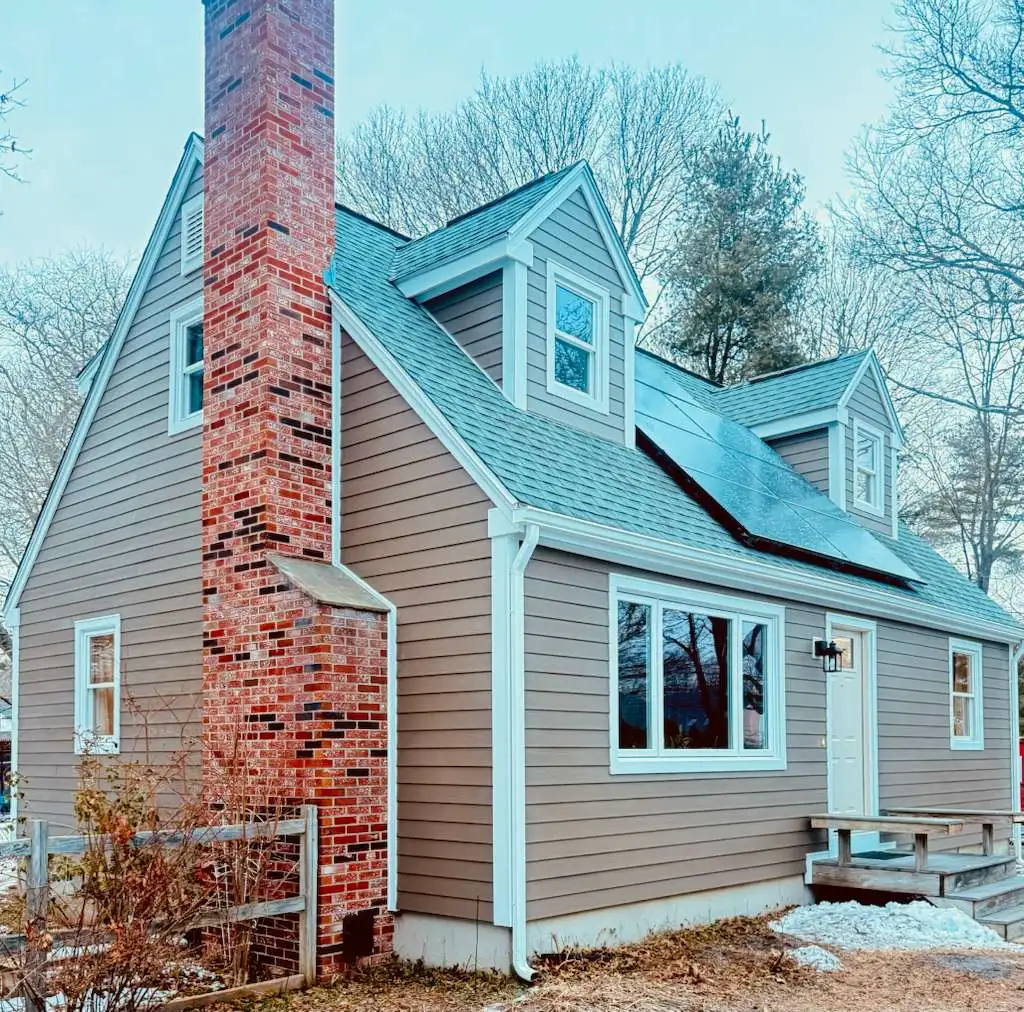
- Aging homes losing their curb appeal: If your existing wood siding has begun to cup and split, composite panels restore a clean, uniform surface without the perpetual repainting that pushed you toward replacement in the first place.
- Properties in high-moisture zones: Homes near lakes, heavy tree cover, or areas with long wet seasons benefit from the rot resistance built into engineered boards, which do not soak up water the way solid wood does.
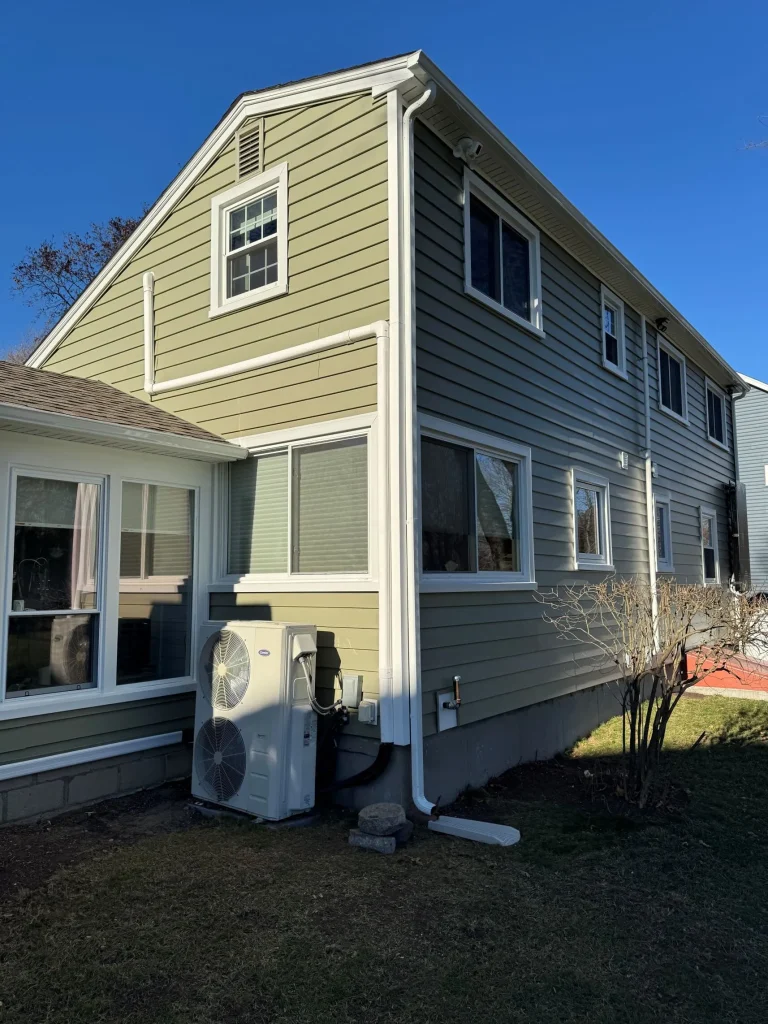
- Additions and remodels: When we build an addition, matching new siding to existing walls is often difficult. Composite profiles offer a wide range of textures that blend seamlessly with what is already on the house.
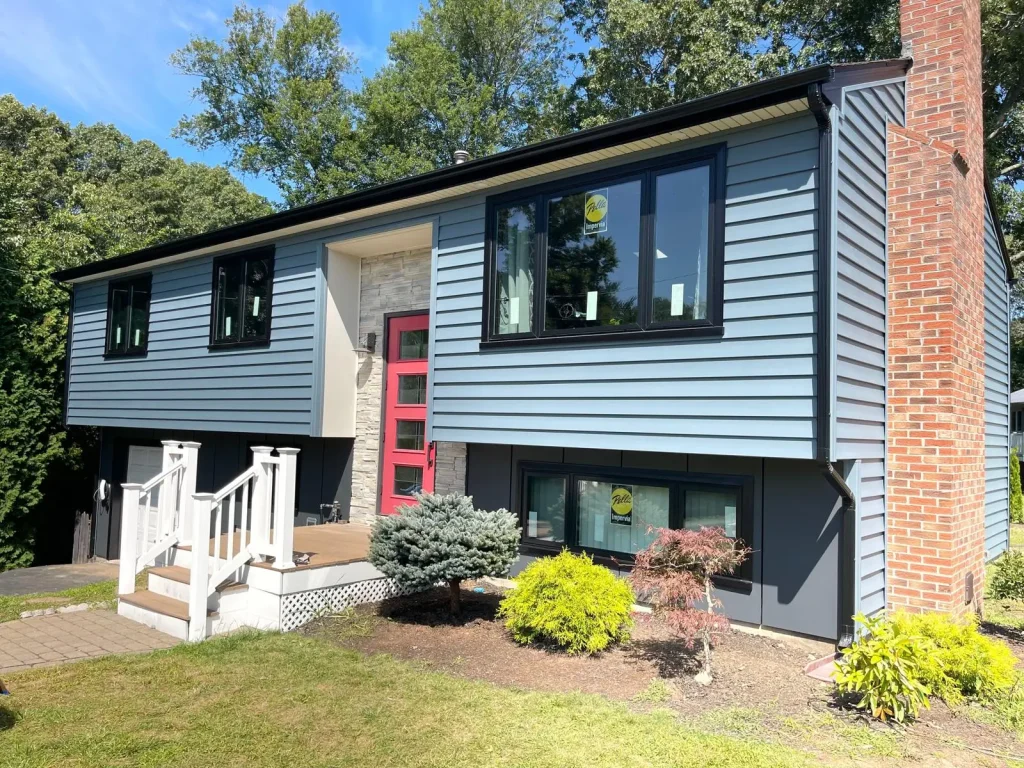
- Modern architectural designs: Wide-plank composite cladding gives contemporary homes the crisp horizontal lines and deep shadow gaps that stucco or vinyl simply cannot deliver.
- Rental and investment properties: Owners who want durable, low-upkeep exteriors appreciate that composite reduces callbacks and long-term maintenance costs between tenants.
How We Approach a Composite Siding Project
Every installation begins with a close inspection of your existing walls. We check the sheathing for soft spots, confirm the condition of the weather-resistant barrier, and look for any signs of past water intrusion. Composite siding is only as good as what sits behind it, so we never fasten new boards over a compromised substrate. If we find damage, we correct it before a single panel goes up.
From there, we manage moisture. Proper flashing at windows, doors, and transitions, along with a continuous drainage plane, keeps water moving away from the structure. We follow manufacturer specifications for fastener type, penetration depth, and the expansion gaps that let the material move with seasonal temperature changes. Skipping those gaps is one of the most common causes of buckling on jobs done in a hurry, and it is exactly the kind of detail our in-house crews are trained to respect.
Technical Details Worth Knowing
Composite siding typically carries strong fire-resistance ratings, especially fiber-cement formulations, and many engineered wood products come with extended factory warranties covering finish and structural integrity. Boards resist impact better than vinyl, so hail and stray debris are less likely to leave permanent marks. Factory finishes are cured under controlled conditions, which means the color bonds far more durably than field-applied paint on raw wood.
Reds Construction Inc. is your trusted home remodeling contractor, and we bring that same standard to composite siding as we do to every part of a home. Since 2010, we have transformed over 600 homes, and our roots in Ukraine and Belarus carry a tradition of craftsmanship and precision into each project. As a GAF Certified Plus contractor offering financing and free estimates, we are ready to help homeowners across Easton, Mansfield, Sharon, Foxborough, Stoughton, Canton, & Walpole, MA protect and beautify their homes for decades to come.